A shy child may have a busy, imaginative inner world while finding it hard to step into a noisy group, answer a question aloud, or show others what they have made. The right art classes for shy children do not try to change that child’s personality. They offer a calmer way to participate, connect, and gradually feel brave enough to be seen.
At the art table, a child can begin with color, line, clay, or a story. There is something reassuring about having a task in their hands. Conversation can grow beside the work rather than being demanded before it. For many quiet children, that makes a meaningful difference.
Why art can feel safer than other group activities
Some extracurricular settings reward quick responses, loud enthusiasm, or competition. There is nothing wrong with those experiences, but they can feel overwhelming for a child who needs time to observe before joining in. Art creates a different kind of doorway.
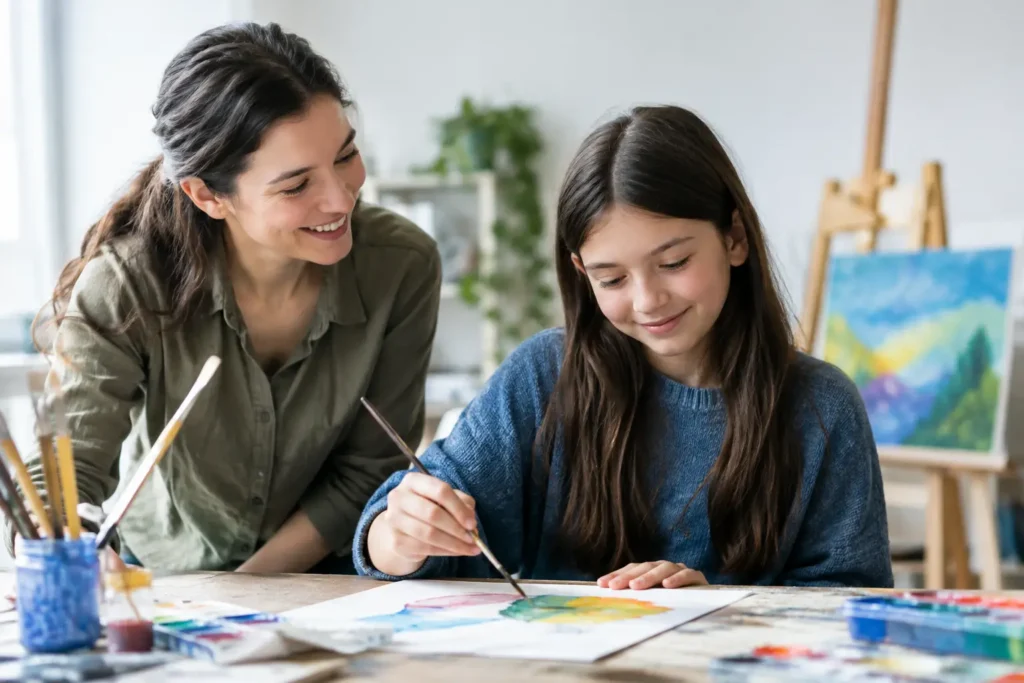
A child can watch a demonstration, choose materials, and start making at their own pace. They can communicate an idea through an image before they have the words to explain it. An instructor can sit beside them, ask a gentle question about their choices, and let silence do its useful work.
This does not mean art is a hiding place. Good teaching invites children forward in manageable steps. They may first share a color choice with an instructor, then describe one part of their work to a classmate, then volunteer an idea during a group discussion. The goal is not to make every child outgoing. The goal is to help them trust their voice, whether that voice is spoken softly or expressed through a bold, unusual painting.
What shy children need from an art class
The best fit is rarely the flashiest program or the one that promises a perfect take-home artwork every week. Shy children often benefit most from a predictable, thoughtfully structured environment where they know what to expect and feel no pressure to perform.
A welcoming arrival, not a forced icebreaker
The first few minutes matter. A child who walks into an unfamiliar room may need a quiet greeting, a clear place to put their bag, and a simple invitation to look around. Being asked to introduce themselves loudly to a circle of strangers can make an already difficult transition harder.
A warm studio can still be lively and joyful. The difference is that children are allowed to enter the rhythm of the class gradually. An attentive instructor notices who is ready to talk and who needs to settle in through making first.
Clear structure with room for choice
Freedom is powerful, but too much open-ended choice can feel intimidating. A strong class gives children a clear creative starting point: perhaps an artist, an animal, a building, a place, or a visual technique to investigate. Within that framework, they have real decisions to make.
Should the creature be friendly or fierce? What colors best tell the story? Which materials will create the texture they imagine? These choices help a child practice independent thinking without facing a blank page entirely alone.
That balance is central to meaningful art education. Technical foundations such as drawing, color mixing, composition, and observation give children useful tools. Personal interpretation gives those tools a purpose. A quiet child learns that there is no single correct way to see the world.
Instructors who notice effort, not just outcomes
Praise can be helpful, but vague applause is not always enough. Saying “That’s beautiful!” may make a child wonder whether they need to keep producing beautiful things to be valued. Specific feedback is more grounding: “You noticed the tiny shapes in that leaf,” or “You kept trying different lines until this one felt right.”
This kind of teaching honors the process. It tells children that curiosity, persistence, and decision-making matter. Over time, they become more willing to take creative risks because mistakes are treated as part of the journey, not proof that they are not good at art.
Small opportunities to connect
Friendship does not always begin with a big conversation. It might start with passing a paint jar, admiring a classmate’s pattern, or working side by side on related projects. Art classes can offer social connection without putting children on the spot.
Group activities should be thoughtfully paced. Pair work and short sharing moments can be valuable, but children should not be pressured to present before they are ready. A skilled instructor can invite participation while respecting a child’s boundaries.
How art classes for shy children build confidence over time
Confidence is often misunderstood as boldness. For a shy child, confidence may look like walking into class without holding tightly to a parent’s hand. It may look like choosing an unexpected color, asking for help, or explaining why their imagined city has windows shaped like stars.
These are real milestones. They tend to arrive through repetition. When children return each week to a familiar studio, see their skills growing, and recognize friendly faces, their sense of belonging starts to take root.
Art also gives progress a visible form. A child can compare an early drawing with a more recent one and see that practice changes what they can do. That evidence matters, especially for children who doubt themselves. The lesson is bigger than art: ability can grow through attention, patience, and trying again.
At Monsters Art Studio, the ARTRU™ Teaching Method is built around this kind of progressive learning. Children explore foundations alongside observation, art history, culture, storytelling, and hands-on experimentation. The finished piece is never the only point. The deeper work is helping each young artist become more observant, capable, and confident in their own ideas.
Choosing the right class for your child
Every shy child is different. Some are quietly independent and simply need time to warm up. Others are anxious in unfamiliar places, sensitive to noise, or hesitant to separate from a caregiver. A studio should be able to meet children where they are while offering a gentle path toward greater participation.
When considering a class, look beyond the artwork displayed on the wall. Ask how instructors support children who are slow to join a group, how they respond when a child says they cannot draw, and whether students are encouraged to make original choices. Notice whether every project looks nearly identical. If it does, the class may be prioritizing adult-approved results over a child’s real thinking.
It is also worth considering age grouping. Young children often need playful sensory exploration, movement, and short, clear activities. Elementary-aged children may enjoy deeper projects that combine drawing skills with imaginative stories and cultural discovery. Older children and teens usually benefit from greater technical challenge, more personal subject matter, and opportunities to develop a creative identity of their own.
A trial class can help, if one is available, but do not expect an instant transformation. Your child may spend the first session watching more than making. They may say very little on the ride home. Look instead for smaller signs: Did they stay in the room? Did they mention a material, an image, or something the instructor said? Did they ask when they can return?
What parents can do before and after class
Your calm confidence is part of the experience. Before class, describe what will happen in simple terms: they will meet the teacher, explore materials, and make something that belongs to them. Avoid promising that they will make friends immediately or create an amazing picture. That can add pressure where none is needed.
After class, try questions that invite reflection rather than evaluation. “What material did you like using?” and “What was one choice you made today?” are often more useful than “What did you make?” A child who is still processing may answer later, perhaps while drawing at home or getting ready for bed.
Most of all, resist the urge to correct, finish, or explain their artwork for them. Their crooked tower, strange purple animal, or unexpectedly messy page may carry more learning than a polished project ever could. When children know their ideas will be received with curiosity, they are more likely to keep offering them.
A shy child does not need to become the loudest person in the room to grow. Give them a thoughtful creative space, patient guidance, and permission to make a few messy choices. Their courage may begin quietly – with a pencil mark, a color they chose for themselves, and the realization that their inner world is worth sharing.