A School Holiday Art Tour can begin with something as simple as a child stopping in front of an old doorway and asking, “Who lived there?” That question is where real art learning starts. Rather than rushing from attraction to attraction, an art-centered holiday gives children time to look closely, notice details, imagine stories, and respond in their own way.
For families, it is a chance to make travel feel less like a checklist and more like a shared creative journey. A gallery, a market, a historic building, or a quiet street can all become places for observation, sketching, conversation, and messy, joyful making.
Why a School Holiday Art Tour Matters
Children are naturally curious, but busy schedules can teach them to move on before they have truly looked. Art slows the pace down. When a young learner studies the pattern on a tile wall, the shape of a roof, or the colors in a painting, they are building observation skills that support drawing, design, problem-solving, and independent thought.
An art tour also helps children understand that creativity does not only happen at a table with a box of supplies. It lives in architecture, food, clothing, public spaces, local stories, and the ways people have shaped their communities. This cultural discovery gives art a wider meaning. A child is not simply copying what they see. They are asking why an artist, maker, or architect made certain choices.
That distinction matters. Perfect-looking work may impress for a moment, but a child who can make decisions, explain an idea, and try again after a drawing goes wrong is developing skills that last much longer.
What Young Artists Can Learn on Tour
A thoughtfully planned tour balances structure with room for surprise. Children benefit from a few guiding prompts, but they also need space to follow the details that catch their attention. One child may be fascinated by carved windows, while another notices shadow, street signs, or the bright colors of a fruit stall. Both observations are valuable starting points.
Looking like an artist
Encourage children to notice line, shape, texture, color, scale, and light. Instead of asking, “Do you like it?” try questions such as, “What did you notice first?” or “What would you borrow for your own artwork?” These questions invite reflection without suggesting there is one correct answer.
A small sketchbook is often more useful than a long worksheet. Quick marks, color notes, tiny maps, and invented stories can capture a child’s thinking without interrupting the experience. Younger children may draw one memorable object. Older learners can compare buildings, plan a composition, or record visual ideas for a future project.
Connecting art to culture and stories
Art becomes more memorable when children understand its context. A museum painting can lead to a conversation about clothing, daily life, migration, or celebration. A neighborhood walk can reveal how materials, weather, history, and community shape a building.
The goal is not to turn a holiday into a lecture. Share one or two meaningful facts, then let children respond. Ask them what they think happened there, whose perspective is missing, or how they might redesign a space for people their age. This is where visual learning grows into empathy and original thinking.
Choosing the Right Pace for Each Age
For ages 4 to 6, keep stops short and sensory. Look for bold colors, interesting textures, sculptures, fountains, or spaces where children can move safely. One focused activity, such as finding five different shapes or making a three-color sketch, is enough.
Children ages 7 to 9 can begin to compare and collect ideas. They may enjoy choosing a favorite artwork, drawing a detail rather than the whole scene, or creating a short story about a place. Give them a clear challenge, then let them decide how to approach it.
For learners ages 9 and above, a School Holiday Art Tour can become a more intentional creative research trip. Encourage them to photograph references, study perspective, identify design choices, and think about careers connected to art, architecture, illustration, media, or design. They do not need to know their future path yet. They only need permission to look closely and explore possibilities.
Bring the Journey Back to the Studio
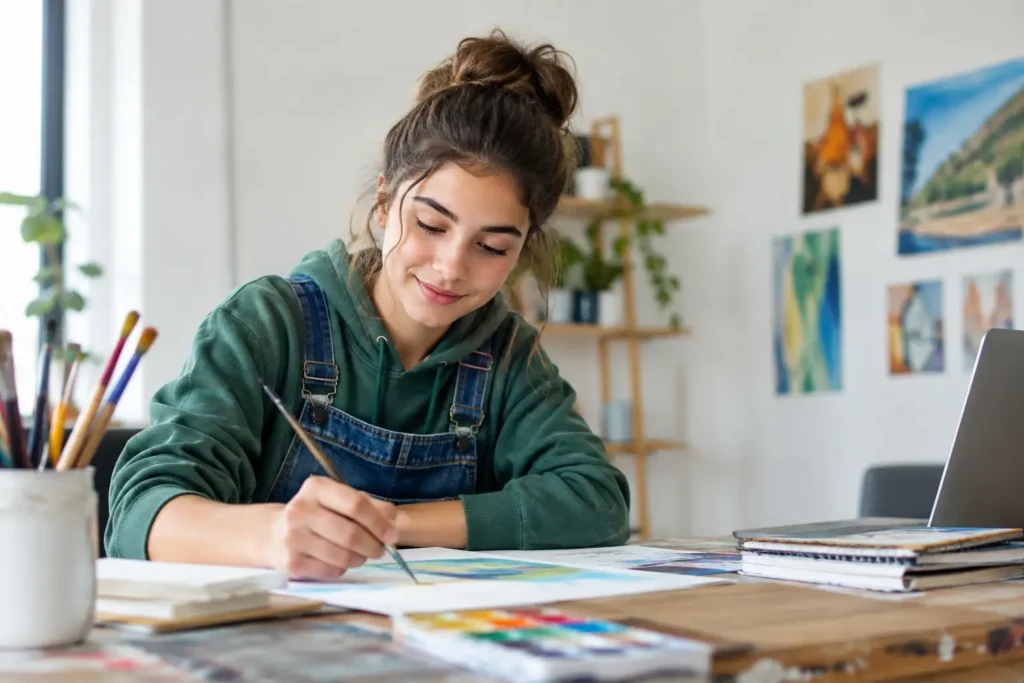
The best art-tour experiences continue after the visit. Back at home or in class, children can turn their collected observations into a painting, collage, model, comic, or visual journal page. The final piece does not need to recreate the place exactly. It can combine memory, imagination, and new ideas.
At Monsters Art Studio, this kind of learning reflects the ARTRU™ Teaching Method: technical foundations grow alongside observation, cultural discovery, experimentation, and a child’s own creative voice. Guidance matters, but ownership matters too. Adults can provide the roots. Children need room to grow in their own direction.
So pack a sketchbook, a pencil, and a little extra time between destinations. The most meaningful souvenir may be the moment your child sees an ordinary place with fresh, artist eyes.